

🔎 Surface Scan
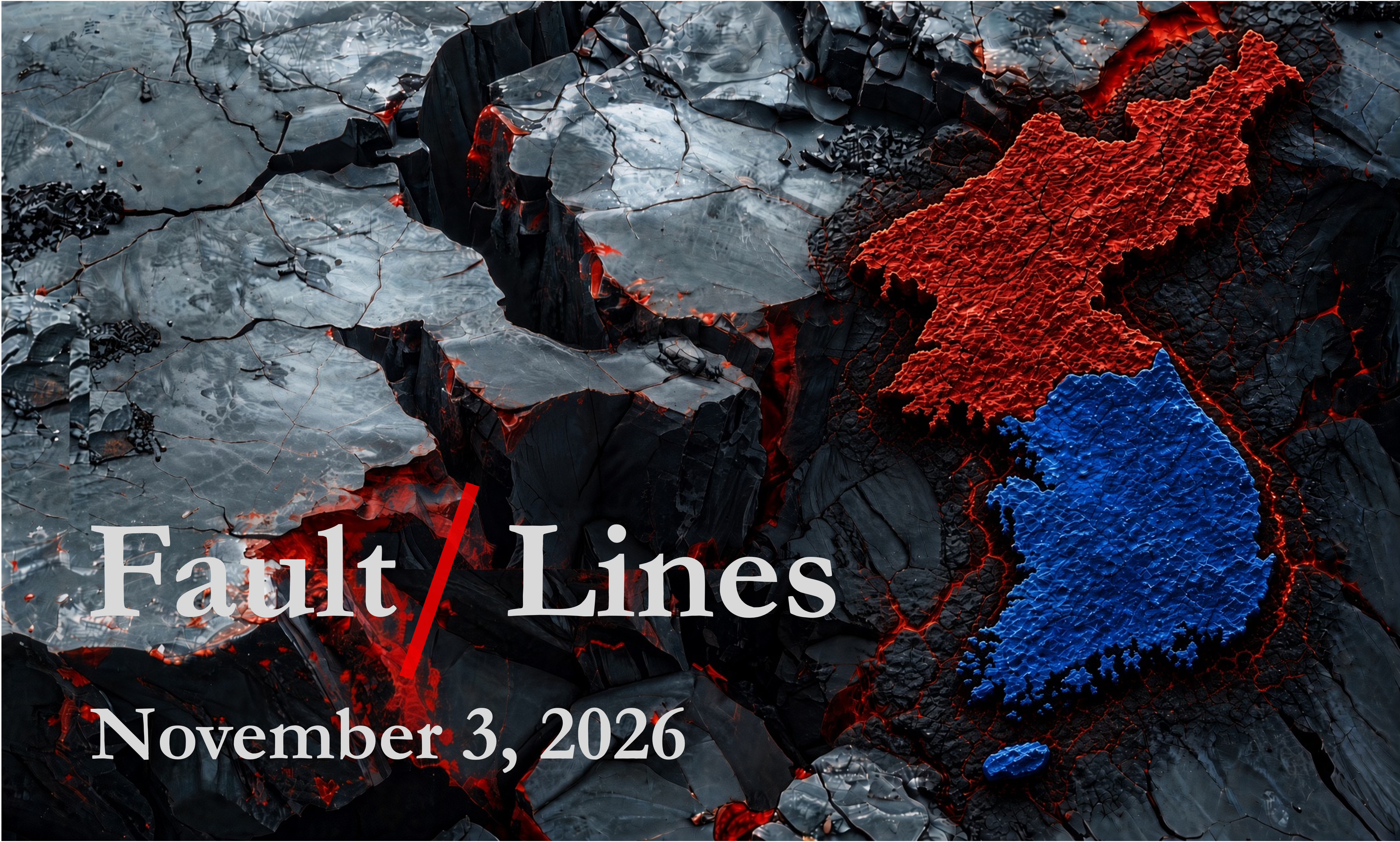
Kim Yo Jong linked the Binance theft attribution to broader U.S. policies she demanded Washington abandon, rejecting meetings while those policies remained in place but retaining dialogue as an option. The Unification Ministry sought further information on the FBI’s attribution before addressing additional sanctions, while President Lee Jae Myung ordered consideration of stronger coordination against cyber threats across government and industry. Binance’s preliminary findings showed how compromised employee systems and persistent wallet permissions allowed theft to continue after withdrawals were suspended. North Korea also claimed advances in cruise-missile cluster warheads, prompting a JCS explanation of surveillance limits before another unidentified launch. Reciprocal China–North Korea party visits reinforced their institutional ties. For Korean industry, U.S. equipment restrictions complicated SK hynix’s proposed American investment, while lower oil prices offered potential cost relief constrained by expensive shipping and unresolved conditions for reopening Hormuz.
🇰🇷 Epicenter
Summary:
• Kim Yo Jong says North Korea has no need to meet Washington while retaining dialogue as an option. In a second statement carried by KCNA November 4, her second on the Binance theft in three days, Kim Yo Jong said dialogue with Washington remained an option for peace but was not necessarily synonymous with North Korea’s national interest. She characterized the hacking attribution as only the visible part of a broader U.S. hostile policy, citing the U.S.–South Korea–Japan foreign ministers’ renewed denuclearization demands, joint military exercises, unilateral and multilateral sanctions, and the U.S. human-trafficking report. She accused Washington of seeking political advantage from the theft allegations while professing interest in improved relations, and said Pyongyang had “no need to sit face to face” with officials who refused to abandon confrontation. She warned of a stronger North Korean response to what she described as escalating U.S. hostility, without specifying measures. Her simultaneous reference to dialogue produced different emphases in coverage: AFP described a rejection of talks, while Yonhap and Kyunghyang highlighted the option she retained. Earlier, on November 3, South Korea’s Unification Ministry said accurate assessment should precede a response, explaining that information concerning the FBI’s findings had not been shared among relevant Korean agencies. It declined to discuss additional sanctions at that stage. A ministry official called Kim’s personal intervention in a cyber dispute unprecedented and interpreted it as evidence of concern about North Korea’s international standing. Assessing her first statement, Korea Institute for National Unification researcher Hong Min said Pyongyang sought to prevent the allegations from becoming negotiating leverage or grounds for additional pressure; Treasury and State Department measures over the following one to two weeks could help clarify prospects for talks. The U.S. State Department separately reiterated that North Korean cryptocurrency theft and laundering supported sanctions evasion and prohibited weapons programs.
Sources: Yonhap — 김여정, 바이낸스사태에 “선택지 대화 있지만 국익 동일시 아냐”; The Korea Times / Yonhap — N. Korea says dialogue with US option but not must for national interest; Herald Business — 김여정 “美, ‘비핵화’ 목소리높여…선택지에 대화 있지만 반드시는 아냐”; AFP, via Arab News — N. Korea warns of stronger response to US ‘hostility’: KCNA; Yonhap, via Korea JoongAng Daily — Pyongyang still open to dialogue with Washington despite ‘hostile U.S. policy’; Kyunghyang Shinmun — 김여정, 미국에 “대화 선택지에 있지만 국익과 동일시되지 않아”; The Korea Herald — Kim Yo-jong’s rare denial of $6.3b crypto heist raises questions over US-N. Korea dialogue; Yonhap — 통일부, ‘北 바이낸스 해킹’ 지목에 “상황 파악이 우선”; SBS — US Says North Korean Cybercrime is Global Problem... North Korea Rejects Claims
• JCS declines to confirm detection of North Korean cruise-missile test as another launch follows. KCNA reported November 3 that North Korea’s Missile Administration had tested a medium-sized cluster warhead on a strategic cruise missile the previous day, claiming it could devastate a five-to-six-hectare target area. It also claimed improved terminal maneuvering had completed a vertical-strike capability, allowing the missile to approach targets from above after low-altitude flight. Kim Jong Sik supervised the test; in a separate November 2 statement, he protested the allied Iron Mace nuclear–conventional integration tabletop exercise and pledged faster development of North Korea’s nuclear deterrent. Pressed at the November 3 Defense Ministry briefing, JCS spokesman Jang Do-young said confirming detection of individual launches would expose surveillance capabilities. He acknowledged that low flight paths and the earth’s curvature could restrict detection of cruise missiles launched from distant northern areas, while asserting that South Korea could detect and respond to missiles approaching its territory. He said the South had fielded superior precision-strike capabilities and related weapons two decades earlier, and that the military would review a reporter’s suggestion to reconsider disclosure standards. South Korean and U.S. authorities were still analyzing the North’s test. Korea Institute for National Unification researcher Hong Min told Kyunghyang that cluster warheads could disable airfields and ports for hours or days without nuclear use, while uncertainty about incoming warhead types could complicate allied interception priorities. On November 4, the JCS announced another unidentified projectile launch toward the East Sea, with its characteristics and range under analysis.
Sources: Kyunghyang Shinmun — 북, 순항미사일로 또 집속탄두 시험…전략 시설 ‘핵 없이 무력화’ 과시; Defense Ministry, via Korea Policy Briefing — 국방부 일일 정례 브리핑; The Korea Times / Yonhap — N. Korea tests ‘dispersal warhead’ for cruise missiles following cluster bomb test; Yonhap — 합참 “북한, 동해상으로 미상 발사체 발사”; Yonhap — 軍 “北, 동해상으로 미상발사체 발사”…탄도미사일이면 나흘만
• Lee seeks stronger cybersecurity coordination as intelligence authorities inspect public systems. President Lee Jae Myung ordered officials November 3 to examine a powerful government-wide body coordinating cybersecurity across public and private institutions. He called for earlier threat detection, warning-sharing and preventive action to protect telecommunications, energy, finance and essential public services. Existing responsibilities are divided among the National Intelligence Service, Science and ICT Ministry and financial authorities. The NIS disclosed that it had requested checklist-based self-inspections from approximately 2,100 central and local government bodies and public institutions on October 22, focusing on internet-facing systems, security monitoring and software patches. Separately, it is directly inspecting vulnerabilities in critical public infrastructure. The science ministry is examining approximately 170 major private-sector infrastructure facilities. Lee’s coordinating-body proposal remains under review.
Sources: Korea Policy Briefing — 이 대통령 “사이버보안, 사후 대응서 선제 예방으로…범정부 총괄기구 검토”; Yonhap, via Financial News — 국정원, 공공 핵심시설 보안점검…2천100여곳엔 긴급점검 요청; The Korea Times — Korea mulls creation of cross-gov’t cybersecurity command
• Binance traces theft through fake recruitment, internal AI tools and persistent wallet permissions. Binance’s November 3 preliminary report described a months-long campaign preceding the October 29 theft. A tampered software installer downloaded in June exposed information about wallet-team personnel; a fabricated recruitment process compromised another engineer’s work computer in September. Attackers subsequently used that computer and an internal AI tool to reach wallet engineers’ systems, steal deployment credentials and compromise wallet-signing operations. On Ethereum, they established permissions allowing a malicious smart contract to move assets independently of Binance’s normal withdrawal system. Suspending withdrawals and shutting down wallet services therefore did not invalidate those permissions; containment required additional transactions to revoke them. Binance put affected assets at approximately $6.34 billion and said about $2.85 billion had been frozen or intercepted. It said company funds would cover customer losses and that independent experts would review its findings.
Sources: Binance — 29 October 2026 Binance Security Incident: Initial Findings and Response Update; CoinDesk — North Korea-linked hackers infiltrated Binance for months before $6.3 billion hack; Newsis — “채용 과제 풀어보세요”…北 해커들, 가짜 면접으로 바이낸스 해킹
• Passport replacements and formal investigation follow presidential delegation’s data exposure. The Foreign Ministry said November 3 it was arranging replacement passports for the 168 people affected by the presidential delegation’s data exposure, including President Lee and the first lady. The ministry said it had removed the information from the website and was examining computers and emails associated with the June trip. Korea JoongAng Daily reported that the passenger file had been uploaded June 2 to VirusTotal, a malware-scanning platform that shares submitted files with security firms and subscribers. The ministry’s preliminary assessment favored internal mishandling rather than an external intrusion; manual submission and automated security scanning were among the possible routes under examination. The Personal Information Protection Commission received the ministry’s breach notification November 3, while the police cyberterror investigation unit opened a formal investigation.
Sources: Korea JoongAng Daily — Presidential data breach may have been internal leak, Foreign Ministry says; Korea JoongAng Daily — President’s passport data likely caused by internal upload to Google-run malware scanning platform, experts say; Asia Economy — 개인정보위, 공군 1호기 탑승자 개인정보 유출 신고 접수
• U.S. equipment-licensing delays complicate SK hynix’s proposed New York investment. Reuters reported November 3 that U.S. officials had held up equipment-export approvals sought for expansion of SK hynix’s Dalian plant in China. Sources said additional Chinese production revenue would help finance two proposed Solidigm NAND plants in Marcy, New York, involving approximately $45 billion initially. Commerce officials remained opposed to allowing American equipment to upgrade or expand Chinese capacity, although the relevant license had not been formally denied and negotiations continued. A separate license for equipment needed to maintain Dalian’s operations in 2027 was also under discussion. Solidigm said it was evaluating potential fabrication sites worldwide and had made no decision on a specific course of action.
Sources: Reuters, via StreetInsider — SK Hynix’s New York chip plans hit snag over US restrictions on China, sources say; Herald Business, citing Reuters — “美, SK하이닉스 中공장 장비반입 제동…뉴욕 공장투자도 차질”
• Navy launches Seo Hui submarine with expanded missile capacity. The Navy and Defense Acquisition Program Administration launched the 3,600-ton Seo Hui at Hanwha Ocean’s Geoje shipyard November 3. The second Jang Bogo-III Batch-II submarine carries ten vertical-launch tubes, compared with six on the preceding Batch-I class, and incorporates improved sonar and combat systems. Its domestically developed lithium-ion batteries and air-independent propulsion increase submerged endurance. The vessel incorporates 70 domestically produced systems, which officials said would strengthen follow-on logistical support and submarine-export capabilities. Sea trials precede planned delivery to the Navy in 2028 and subsequent operational deployment.
Sources: Yonhap — “한반도 안보 핵심 전략자산”…3천600t급 잠수함 ‘서희함’ 진수; Navy and DAPA release, carried by Seoul Pn — 세계 최고 수준의 3,600톤급 디젤잠수함 ‘서희함’ 진수; The Korea Times — Korea launches 3,600-ton submarine, boosting naval deterrence, defense export capacity
• Korea and Türkiye expand nuclear financing, defense cooperation and trade dialogue. President Lee and visiting Turkish President Recep Tayyip Erdoğan agreed November 3 to deepen cooperation in nuclear power, defense and other strategic industries. A nuclear-project financing memorandum supports potential Korean participation in Türkiye’s planned nuclear construction, building on continuing site assessment and joint working-group activity for Sinop. The leaders also backed wider defense coproduction, technology cooperation and exploration of third-country projects. Their governments agreed to elevate the bilateral FTA joint committee from director-general to ministerial level, while Erdoğan sought faster completion of talks on updating the agreement. The summit also addressed import restrictions, customs delays and trade imbalances. The financing memorandum advances preparations for possible projects; Türkiye has yet to select a partner for Sinop.
Sources: Presidential Office, via Korea Policy Briefing — 한-튀르키예 정상회담 결과 관련 김성완 대변인 서면 브리핑; Korea JoongAng Daily — Korea, Turkey advance Sinop nuclear power plant financing at Seoul summit; Newsis — 이 대통령 “튀르키예 원전 韓기업 참여 선제적 지원”…에르도안 “FTA 개정 조속 마무리”; Yonhap — 한·튀르키예 FTA 공동위, 정상회담 계기 장관급 격상
• Industry Ministry shifts manufacturing-AI support toward reuse across factories. The Industry Ministry announced a four-stage AI-factory expansion strategy November 3, seeking to spread successful applications beyond individual production processes. It will analyze 541 existing AI models, identify reusable applications, adapt them to similar factories and extend cooperation across supplier networks and industrial complexes. The ministry cited repeated development of similar solutions as a weakness in existing support. Its eventual objective is integrated AI control of production planning, manufacturing, inspection and logistics. A proposed ₩120 billion allocation for 2027 would support full-stack factories and manufacturing foundation models under a planned 2027–2031 technology-development program.
Sources: Industry Ministry, via Korea Policy Briefing — 대한민국 제조업 판 바꾼다... 산업부, 제조AI 4단계 확산전략 가동; Yonhap, via Maeil Business — 공정별 AI 성과, 산업 전반 확산…산업부, 4단계 전략 가동; Aju Press — South Korea to Support 245 AI Factories, Expanding Manufacturing AI Innovation
Impact:
North Korea’s response to the Binance attribution complicates Seoul’s pursuit of renewed dialogue by placing action against illicit financing within Pyongyang’s demands for changes to U.S. policy. Kim Yo Jong’s statements give the North grounds to portray further enforcement as an obstacle to engagement, while leaving talks available when it judges them advantageous. The Unification Ministry’s request for further information leaves Seoul’s position on additional sanctions unsettled. Binance’s technical findings also expose a concrete containment problem for South Korean financial institutions: stopping ordinary withdrawals may leave malicious on-chain permissions active, allowing losses to continue after an exchange suspends service. Lee’s coordination proposal therefore concerns how quickly institutions can identify compromised access, share warnings and execute effective containment across divided jurisdictions. The presidential passenger-file exposure extends the security problem to internal document handling, where routine submission to an external scanning service may disseminate sensitive information. In military planning, the reported cluster-warhead capabilities raise the prospect of disruption to Korean airfields and ports without nuclear use, while uncertainty about incoming warhead types complicates interception priorities. Seo Hui’s additional missile capacity will strengthen the Navy’s undersea strike capability after sea trials, delivery and operational preparation. For SK hynix, the licensing dispute creates a direct financing constraint: restrictions on Chinese production could limit revenue intended to support American expansion, making the proposed investment dependent partly on Washington’s treatment of the company’s existing Chinese operations.
🌏 Shifting Plates
Summary:
• North Korea and China expand party exchanges in both directions. A Workers’ Party delegation led by international-affairs secretary Kim Song Nam arrived in Beijing November 3 at the Chinese Communist Party Central Committee’s invitation, KCNA confirmed November 4. Chinese International Department Deputy Head Sun Haiyan and North Korean Ambassador Ri Ryong Nam received the delegation. The visit followed Kim Jong Un’s October 24 trip to Dandong, which Kim Song Nam also accompanied. Kyodo first reported the delegation’s journey November 3; its detailed agenda was not disclosed. Meanwhile, a Chinese Central Party School delegation led by Executive Vice President Xie Chuntao, visiting Pyongyang since November 2, met Workers’ Party secretary Ju Chang Il November 3 and visited the North’s Central Cadres Training School. The reciprocal visits extend exchanges beyond leadership meetings into the institutions responsible for party relations and cadre education.
Sources: Yonhap, reporting KCNA — 북중 ‘밀착’ 가속…고위급 교류·친선 활동 잇달아; Yonhap, English — Senior N. Korean party official visiting China: KCNA; Kyodo, via Livedoor — 北朝鮮の党代表団が訪中 金成男書記、関係強化か
• China and Russia seek closer military coordination in Beijing talks. Central Military Commission Vice Chairman Zhang Shengmin met Russian Defense Minister Andrei Belousov in Beijing November 3, calling for stronger strategic communication and cooperation to defend their countries’ sovereignty, security and development interests. Belousov pledged closer consultation, mutual support and expanded practical cooperation across military relations. Reuters identified the encounter as Zhang’s first publicly known meeting with a minister from another country since his promotion to the Communist Party Politburo the previous week. The meeting also demonstrated continuity in Beijing’s military diplomacy amid leadership upheaval: Reuters reported that Zhang and President Xi Jinping were the only active members remaining from the seven-member military commission appointed in 2022, following the removal of five members in the anti-corruption campaign.
Sources: Xinhua — 张升民会见俄罗斯国防部长; Reuters, via Business Recorder — China military vice chair meets Russian defence minister in Beijing
• China raises foreign-currency reserve requirements to restrain yuan appreciation. The People’s Bank of China announced November 3 that financial institutions’ foreign-exchange deposit reserve requirement would rise from 4% to 6%, effective November 15. Reuters calculated that the increase would absorb approximately $24 billion in foreign-currency liquidity. By requiring banks to retain more foreign currency as reserves, the measure reduces available dollar liquidity and seeks to temper expectations of continued yuan appreciation. The yuan had gained more than 5% against the dollar this year, supported by strong exports, trade surpluses and corporate conversion of foreign-currency earnings. Following the announcement, the onshore yuan weakened as much as 0.37% to 6.6728 per dollar. The decision reverses the direction of the central bank’s September 2023 reserve adjustment, when it lowered the requirement to counter yuan depreciation and capital outflows.
Sources: People’s Bank of China announcement, reproduced by Xinhua — 中国人民银行决定上调金融机构外汇存款准备金率; Reuters, via AOL — China to raise FX reserve requirement to slow yuan’s rally
Impact:
The expansion of China–North Korea party ties gives Pyongyang sustained access to Beijing through political and cadre-training institutions. Exchanges involving international-affairs officials and cadre-training institutions reinforce relationships below the summit level, providing channels through which the two parties can communicate priorities and maintain cooperation during diplomatic disputes. For South Korea, these visits indicate that the recent rapprochement between its northern neighbor and China is acquiring institutional support beyond meetings between national leaders. China–Russia military consultations sustain another channel for coordination between two powers whose positions shape peninsula diplomacy, while demonstrating that Beijing’s senior military turnover has not interrupted those contacts. In regional finance, China’s effort to slow yuan appreciation could temper the improvement in South Korean exporters’ price competitiveness against Chinese suppliers that a stronger yuan would otherwise provide. The effect depends on the won’s movement against the yuan and on how firms price their exports; the reserve change directly affects foreign-currency liquidity, rather than setting a new exchange-rate target.
🌍 Global Ripples
Summary:
• Qatar sustains U.S.–Iran mediation as Tehran conditions reopening Hormuz on U.S. concessions. Qatar said November 3 that Washington and Tehran were reviewing proposals exchanged through mediators after a Qatari delegation returned from talks in Iran. Foreign Ministry spokesman Majed Al Ansari said both sides remained engaged, although no specific breakthrough could yet be identified. A senior Iranian official told Reuters the sides remained far from agreement and that reopening the Strait of Hormuz depended on acceptance of Tehran’s conditions. Iran’s proposed sequence calls for the United States to lift its naval blockade, grant relief from oil sanctions and cancel new sanctions before Iran restores normal passage through the strait, with other negotiations following. Meanwhile, U.S. officials described overnight strikes on Qeshm Island as limited defensive action targeting surface-to-air missiles used against American assets. Trump renewed warnings of military action November 3 while leaving negotiations open.
Sources: Qatari Foreign Ministry — Qatar Continues Its Efforts to Bridge Gap between Washington, Tehran; Yonhap — 카타르 “美·이란 간접 협상 진전…양측 제안 검토 중”; Reuters, via AOL — Iran, US still far apart on deal; Trump says ready but in no hurry for strikes
• Oil extends losses as Aramco develops export routes bypassing Hormuz. Brent settled November 3 at $103.60 a barrel, down $1.17, while WTI fell 37 cents to $96.09—their lowest closes since October 7 and October 14 respectively. Markets weighed prospects for negotiations over the Iran and Ukraine wars against continuing attacks on energy supplies. Aramco CEO Amin Nasser said work had begun on expanding the East-West pipeline and that engineering work was underway on additional export routes, with details awaiting final investment decisions. The existing pipeline, which carries crude to Red Sea export terminals, can transport up to seven million barrels daily and has itself suffered attacks during the war. Aramco is also exploring additional overseas storage. Nasser said more than 130 tanker attacks had been reported and that very large crude carrier freight rates had risen to more than fifteen times their year-earlier level.
Sources: Reuters, via MarketScreener — Oil prices ease to settle near 4-week low on hopes peace talks will end wars; Reuters, via The Jerusalem Post — Aramco exploring expansion of crude pipeline to bypass Strait of Hormuz blockade; Aramco — Aramco announces third quarter 2026 results
• Russia strikes Ukraine’s power network as Ukraine hits a Russian refinery. Russia attacked Ukrainian energy infrastructure overnight November 2–3 with 289 drones, seventeen ballistic missiles and 59 cruise missiles, according to President Volodymyr Zelenskyy. DTEK said three of its five thermal power plants were knocked offline, while outages affected Kyiv and at least six other regions. Ukrainian officials also reported damage to railway infrastructure, passenger carriages and locomotives. Russia’s Defense Ministry said its forces targeted electricity facilities supplying military industry and the armed forces. Russian officials separately reported a fire at a major refinery in Yaroslavl following a Ukrainian drone attack. The strikes preceded planned U.S.-brokered talks in Abu Dhabi, where Zelenskyy said a proposed ceasefire covering energy targets would be high on Ukraine’s agenda.
Sources: Reuters, via Investing.com — Russian strikes knock out power to swathes of Ukraine; Kyiv hits Russian refinery; Ukrainska Pravda, Ukrainian — Зеленський розповів, скільки балістичних ракет випустила РФ по Україні в ніч на 3 листопада; Ukrainska Pravda, English — Zelenskyy says Russia launched 17 ballistic missiles against Ukraine overnight
Impact:
Lower crude prices offer potential relief for South Korea’s energy import bill, but elevated freight costs and disrupted shipping continue to weigh on delivered supplies. The decline in benchmark prices can reduce procurement costs as contracts reset and inventories turn over, while expensive tanker transport absorbs part of that benefit. Iran’s conditions for reopening Hormuz tie restoration of normal passage to contested U.S. decisions on the blockade and sanctions, leaving cargo reliability dependent on implementation of an agreement. Aramco’s work on alternative routes and exploration of overseas storage could diversify delivery options over time; the existing East-West pipeline’s exposure to attack shows why bypassing the strait does not eliminate infrastructure risk. In the Russia–Ukraine war, attacks on electricity generation and refining capacity place the protection of energy infrastructure at the center of proposed ceasefire discussions. For South Korean energy buyers, damage to Russian refining adds uncertainty to international fuel availability, while any easing of restrictions on Russian exports would depend on the terms of a settlement.
🔗 Convergence
North Korea’s response to the Binance attribution makes accountability for alleged cybercrime another point of contention in prospective engagement with Washington. Kim Yo Jong places the allegation alongside sanctions, denuclearization demands and allied exercises, seeking to make changes in U.S. policy the premise for talks while retaining dialogue when it serves Pyongyang’s interests. For Seoul, that positioning gives decisions about financial enforcement diplomatic consequences without resolving the security concerns that underpin enforcement. The cruise-missile cluster-warhead claims add a concrete military pressure: the potential to disrupt airfields and ports without nuclear use complicates defense planning even as the scope of the North’s demonstrated capability remains under analysis. Binance’s findings identify a specific challenge for South Korea’s cybersecurity efforts: attackers can establish transaction permissions that remain active even after an exchange suspends withdrawals. Stronger coordination can improve detection and containment, but its effectiveness depends on institutions being able to act on the particular mechanisms an attacker exploits. Gulf diplomacy affects Seoul through energy procurement: lower crude prices reflect expectations of relief, while contested conditions for reopening Hormuz and costly tanker transport leave reliable deliveries unresolved. The consequential distinction is between reducing identifiable vulnerabilities through South Korean institutions and securing changes that depend on decisions by other governments and the outcome of negotiations. Seoul can strengthen its financial defenses and military capabilities, while the terms of engagement with Pyongyang and the restoration of Gulf shipping remain subject to negotiations it cannot determine alone.